I Ching Oracle

Traditional Yarrow Stalk Divination Method

Historical Preservation of I Ching Wisdom

🏛️ Song Dynasty Printed Edition
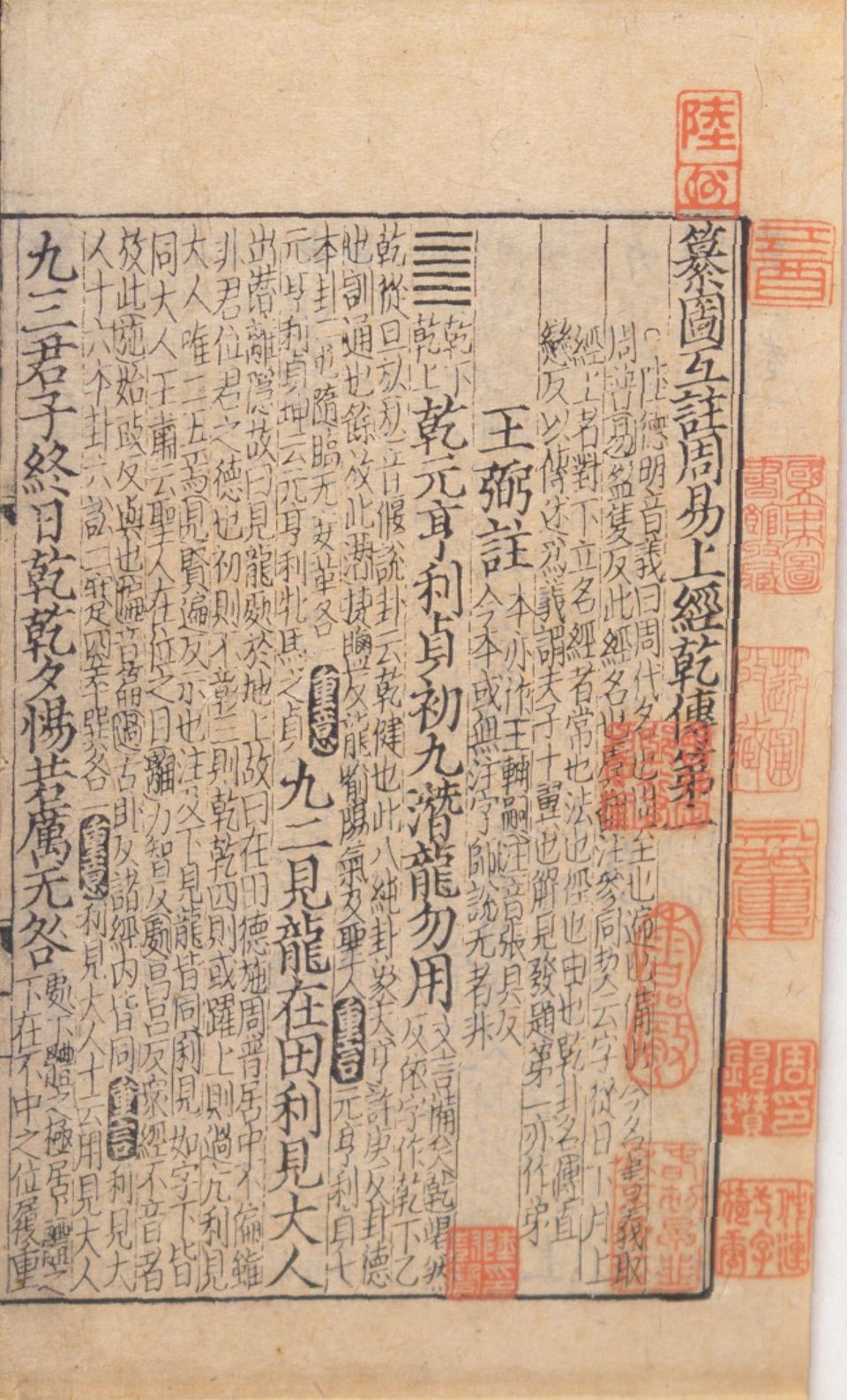
Song Dynasty I Ching page

A page from a Song Dynasty (960-1279) printed book of the I Ching (Yi Jing, Classic of Changes or Book of Changes), 17.7x11.9cm, printed book, in the National Central Library in Taipei.

This remarkable example of a Song Dynasty (960-1279) printed I Ching page, measuring 17.7x11.9cm and now housed in the National Central Library in Taipei, demonstrates the sophisticated printing technology and scholarly dedication of Song Dynasty China. The page is filled with densely packed traditional Chinese characters, written in vertical columns from right to left, with several red seals or stamps visible on the margins, adding to its historical significance.

The enduring wisdom of the I Ching has been preserved through centuries of careful scholarship and printing, as evidenced by this authentic historical document. Such ancient texts represent the continuous tradition of transmitting the I Ching's profound wisdom through generations with meticulous care and reverence.

🎋 Imperial Japanese Handscroll
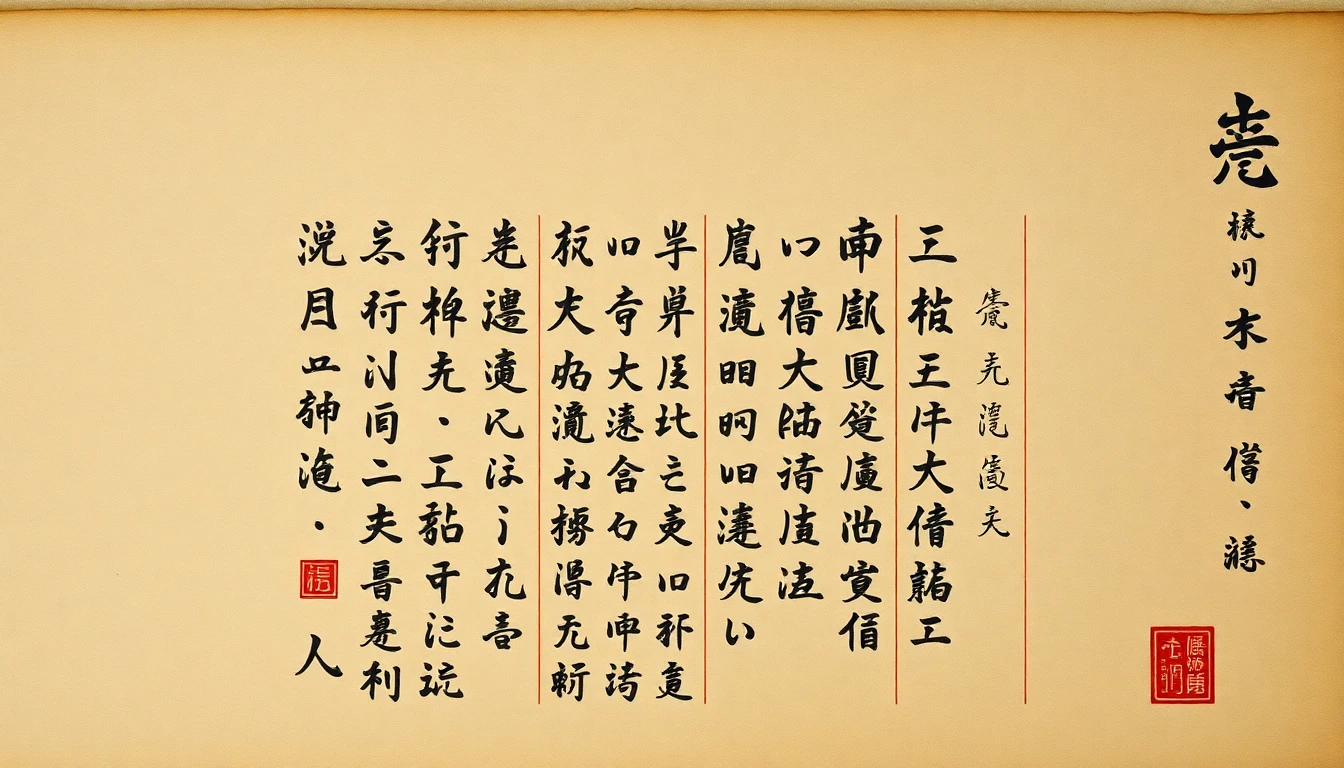
Emperor Uda I Ching handscroll

A part of Notebook handscroll of I Ching (Book of Change) written by Emperor Uda (867 – 931), Higasiyama Imperial Library, Kyoto, Japan
日本語: 宇多天皇(867 – 931), 周易抄 部分、御物、京都東山文庫

This extraordinary handscroll fragment represents the personal I Ching studies of Emperor Uda (867-931), the 59th Emperor of Japan during the early Heian period. Preserved in the prestigious Higasiyama Imperial Library in Kyoto, this document demonstrates how the I Ching transcended cultural boundaries and became treasured wisdom for rulers across East Asia.

Emperor Uda's handwritten I Ching commentary reflects the profound respect Japanese imperial scholars held for Chinese classical wisdom. The careful brushwork and scholarly annotations visible in this handscroll show how the I Ching was not merely copied but deeply studied and contemplated by one of Japan's most learned emperors.

The preservation of this imperial handscroll in Kyoto's most important cultural repository highlights the I Ching's status as essential wisdom literature that influenced governance, philosophy, and spiritual practice across the Japanese imperial court for over a millennium.

📜 Ming Dynasty Trigram Compilation
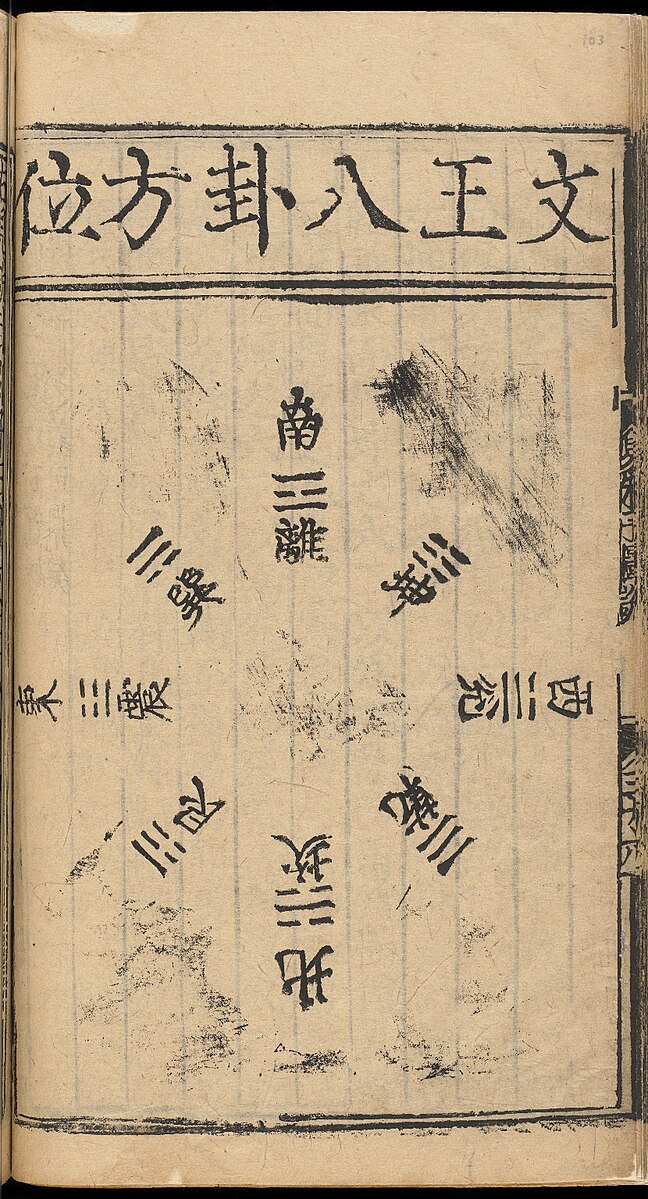
1440 Zhou Yi Zhuan Yi Da Quan trigram page

A wood block printed page on bamboo paper from a 1440 version of Zhou Yi Zhuan Yi Da Quan by Hu Guang depicting the eight trigrams

This remarkable woodblock-printed page from 1440 represents the Zhou Yi Zhuan Yi Da Quan (Complete Explanations of the Zhou Yi), compiled by the Ming Dynasty scholar Hu Guang. Printed on traditional bamboo paper using sophisticated woodblock printing techniques, this page beautifully illustrates the eight foundational trigrams that form the basis of all 64 hexagrams in the I Ching system.

The precision of the woodblock carving and the quality of the bamboo paper demonstrate the advanced printing technology of 15th-century China. This particular edition was part of a comprehensive scholarly effort during the Ming Dynasty to preserve and systematize classical Chinese wisdom texts, ensuring their transmission to future generations with unprecedented accuracy and clarity.

The eight trigrams depicted on this page represent the fundamental building blocks of I Ching divination: Heaven (乾), Earth (坤), Thunder (震), Wind (巽), Water (坎), Fire (離), Mountain (艮), and Lake (兌). This Ming Dynasty presentation shows how these symbols were understood and transmitted through China's golden age of classical scholarship, connecting us directly to the unbroken chain of I Ching wisdom.

Unbroken Tradition: When we consult the I Ching today, we participate in this unbroken tradition that spans over a millennium of human seeking for wisdom and understanding of life's patterns. These historical documents remind us that the wisdom we access through digital means today was once carefully preserved by devoted scholars, emperors, and sages who recognized its enduring value for humanity across cultures and centuries.
Welcome to the I Ching Oracle

🏛️ History & Overview

The I Ching (易經), or "Book of Changes," is one of the oldest divination systems in the world, with origins dating back over 3,000 years to ancient China. Created during the Zhou Dynasty, it was later developed by philosophers including King Wen, the Duke of Zhou, and Confucius. The I Ching is both a philosophical text and a practical divination tool that describes the fundamental patterns of change in the universe through 64 hexagrams, each representing a unique life situation or cosmic principle.

Unlike fortune-telling that claims to predict fixed futures, the I Ching reveals the energetic patterns and natural tendencies present in your current situation. It serves as a mirror for self-reflection and a guide for wise action, helping you understand the deeper currents affecting your life and how to work harmoniously with them.

⚡ How the I Ching Works

The I Ching operates on the principle of synchronicity - meaningful coincidences that reveal deeper patterns. When you ask a sincere question, the casting process connects you with the universal flow of change, revealing which of the 64 hexagrams most accurately describes your situation.

Each hexagram consists of six lines, either solid (Yang ☰) representing active, creative force, or broken (Yin ☷) representing receptive, yielding force. Some lines may be "changing," indicating areas of your life in active transformation. The interplay of these forces creates a unique energetic signature that speaks to your circumstances.

The system recognizes that change is the only constant in life, and by understanding the nature of change affecting your situation, you can make choices that align with natural law rather than fight against it.

🌾 Traditional Yarrow Stalk Method

This oracle uses the traditional 49 yarrow stalk method, considered the most authentic way to consult the I Ching. The process involves:

  1. Preparation: Begin with 49 yarrow stalks (one is set aside as the "observer")
  2. Division: Randomly divide the remaining 48 stalks into two piles
  3. Counting: Take one stalk from the right pile, then count both piles in groups of four
  4. Remainder Collection: Collect the remainder stalks (4-9 total)
  5. Repetition: Repeat this process three times for each line
  6. Line Determination: The total remainder stalks determine if the line is Yin, Yang, or changing

Each line is built from bottom to top, creating a six-line hexagram. The entire process requires patience and mindfulness, as the careful attention you bring to the casting directly affects the quality of guidance received.

🔮 What to Expect from Your Reading

Your I Ching consultation will provide several layers of insight:

  • Primary Hexagram: Describes your current situation and the fundamental energies at play
  • Trigram Analysis: Examines the interaction between your inner nature (lower trigram) and external circumstances (upper trigram)
  • Changing Lines: Highlight specific areas of transformation and provide detailed guidance for those aspects
  • Transformed Hexagram: If changing lines are present, shows the likely outcome if current patterns continue
  • Deep Symbolic Analysis: Explores the elemental and directional meanings for profound insight
  • Personalized Guidance: Advice specifically tailored to your question and circumstances

Remember: The I Ching doesn't predict a fixed future but reveals the natural tendencies and optimal approaches for your situation. Your conscious choices and actions ultimately shape the outcome.

❓ Choosing Your Question

The quality of your question directly affects the usefulness of your reading. Effective I Ching questions are:

  • Specific but Open-ended: "How can I improve my relationship with [specific person]?" rather than "Will we break up?"
  • Focused on Your Role: "What approach should I take?" rather than "What will others do?"
  • Present or Near-Future Oriented: Current situations and immediate decisions receive clearer guidance
  • Seeking Wisdom, Not Just Outcomes: "What do I need to understand about this situation?" often yields deeper insight

Examples of Good Questions:

  • "What approach will best serve my career transition?"
  • "How can I navigate this family conflict with wisdom?"
  • "What inner development would most benefit my current situation?"
  • "What factors should I consider in making this important decision?"

Why Your Question Matters: The I Ching responds to your sincere inquiry by revealing the patterns most relevant to your concern. A thoughtful question creates a clear channel for wisdom, while a vague or frivolous question may receive unclear guidance. Approach with genuine respect for the process and honest desire for insight.

🙏 Preparation Guidelines

Before casting:

  • Take a few moments to center yourself and clear your mind
  • Formulate your question clearly and write it down
  • Approach with an open mind and genuine respect for the wisdom tradition
  • Be prepared to reflect deeply on the guidance received
  • Remember that some questions may require multiple consultations over time

Your Question

Hexagram Completion Method

Your Hexagram

6
5
4
3
2
1

Upper Trigram

-

Lower Trigram

-

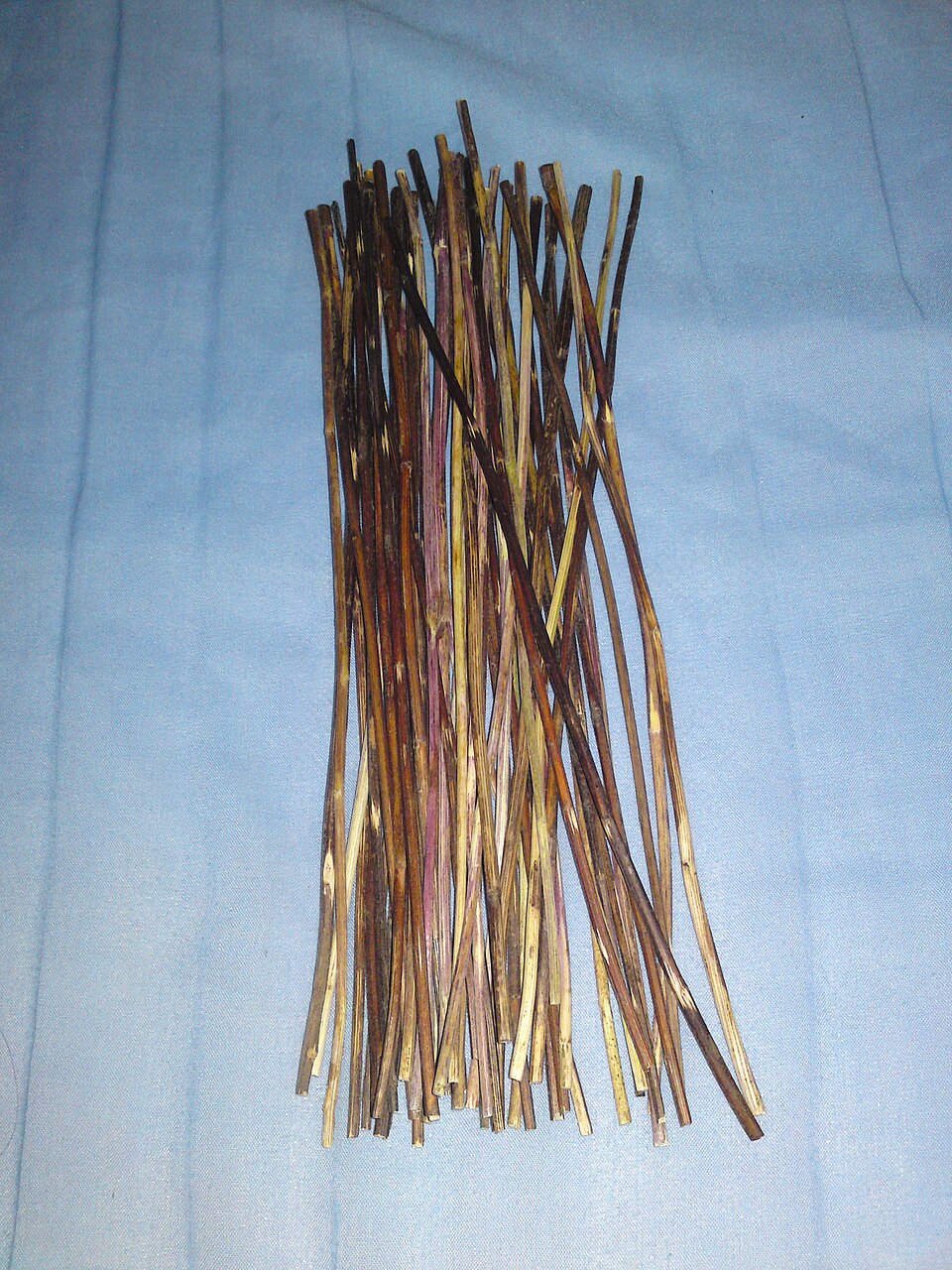
Traditional Yarrow Stalks for I Ching Divination

Bundle of 50 yarrow stalks for I Ching

A bunch of 50 yarrow Achillea millefolium subsp. millefolium var. millefolium stalks, used for I Ching divination

These traditional yarrow stalks (Achillea millefolium) represent the authentic method of I Ching consultation that has been practiced for over 3,000 years. The yarrow plant was chosen by ancient Chinese sages not only for its practical properties—straight, uniform stems that are easy to handle and count—but also for its symbolic significance representing longevity, wisdom, and the ability to divine the future.

Traditionally, exactly 50 stalks are gathered, with one set aside as the "observer" and the remaining 49 used in the casting process. The dried stalks shown here display the natural variation in color from light beige to darker brown that occurs during the drying process, creating the authentic tools used by I Ching practitioners throughout history.

While this digital oracle simulates the traditional yarrow stalk method through mathematical probability, seeing these actual stalks helps connect us to the physical reality of this ancient practice and the countless seekers throughout history who have used similar bundles to seek wisdom and guidance from the I Ching.